Braided Hairstyles Cornrows: 15 Stunning Looks To Inspire You
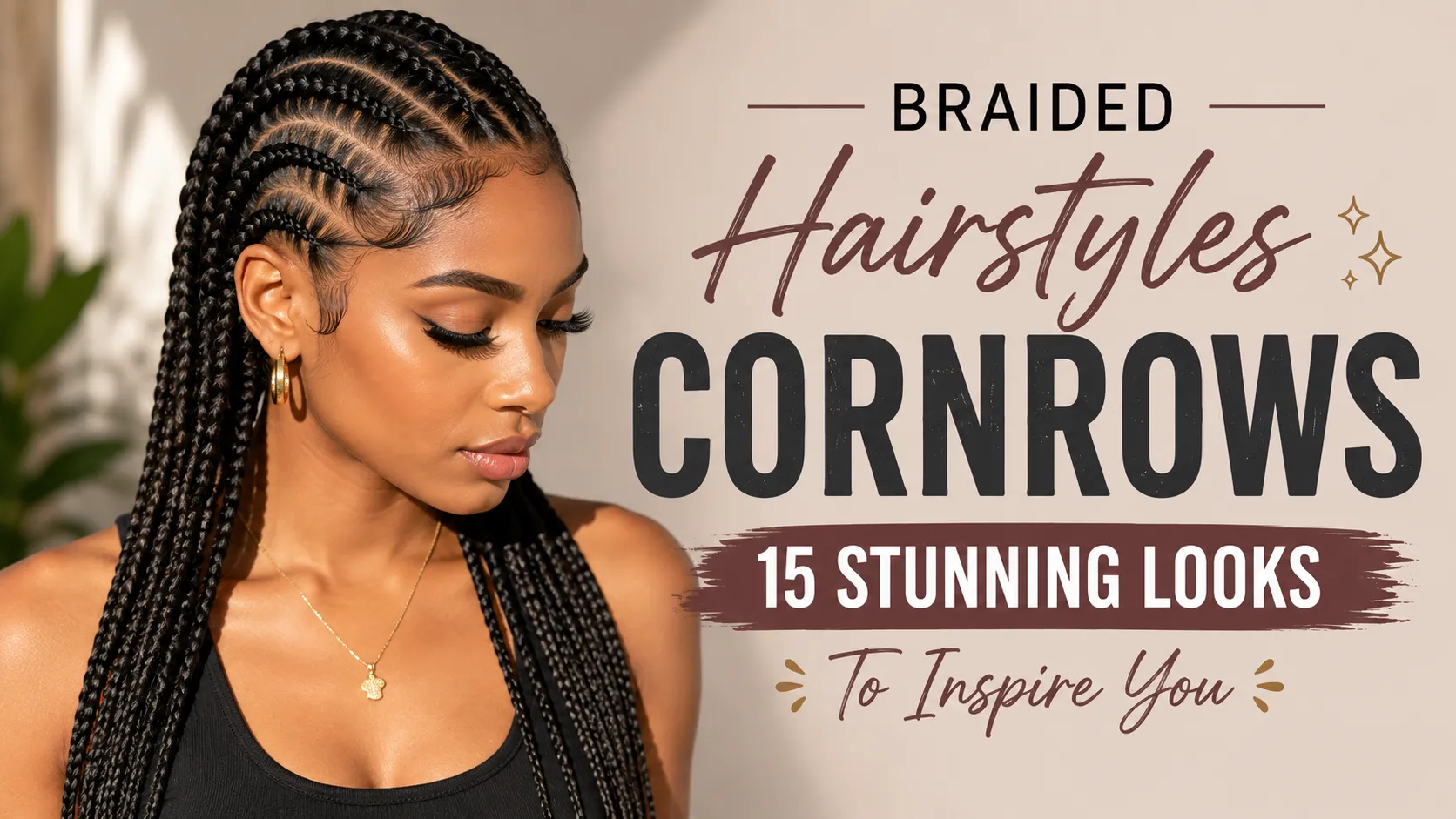
Cornrows give you a practical way to express your style while keeping your hair neatly organized. From simple straight-back rows to sculpted geometric patterns, they can be adapted to suit different hair textures, styling preferences, and occasions. The right design can also make your routine easier by reducing daily manipulation and giving you a polished look that stays consistent for days or weeks.
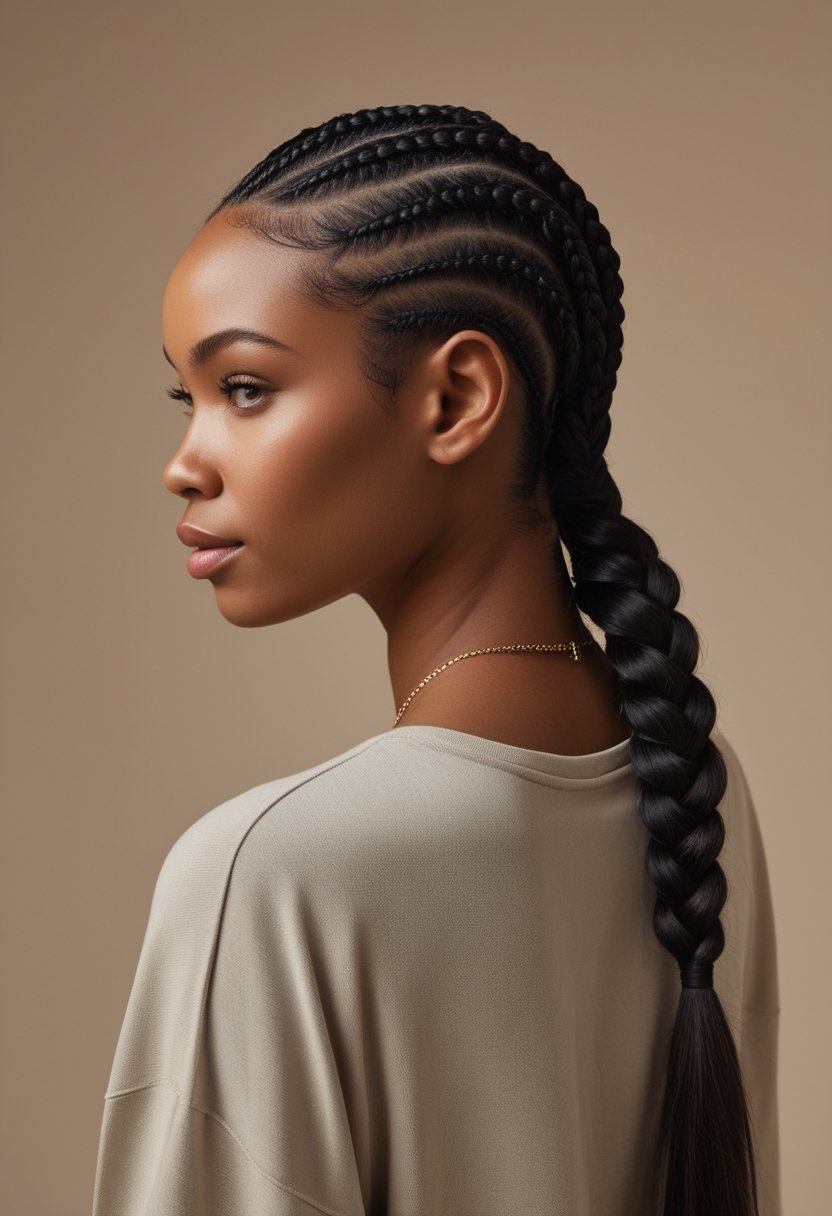
You’ll discover cornrow ideas that help you choose a style matching your texture, routine, occasion, and comfort. Explore clean straight-backs, detailed geometric designs, artistic patterns, protective updos, ponytails, crowns, and looks finished with curls or extensions. Use these ideas as inspiration for your next appointment while keeping scalp comfort and edge protection in mind.
1. Classic straight-back cornrows: A guide for neat protective styling
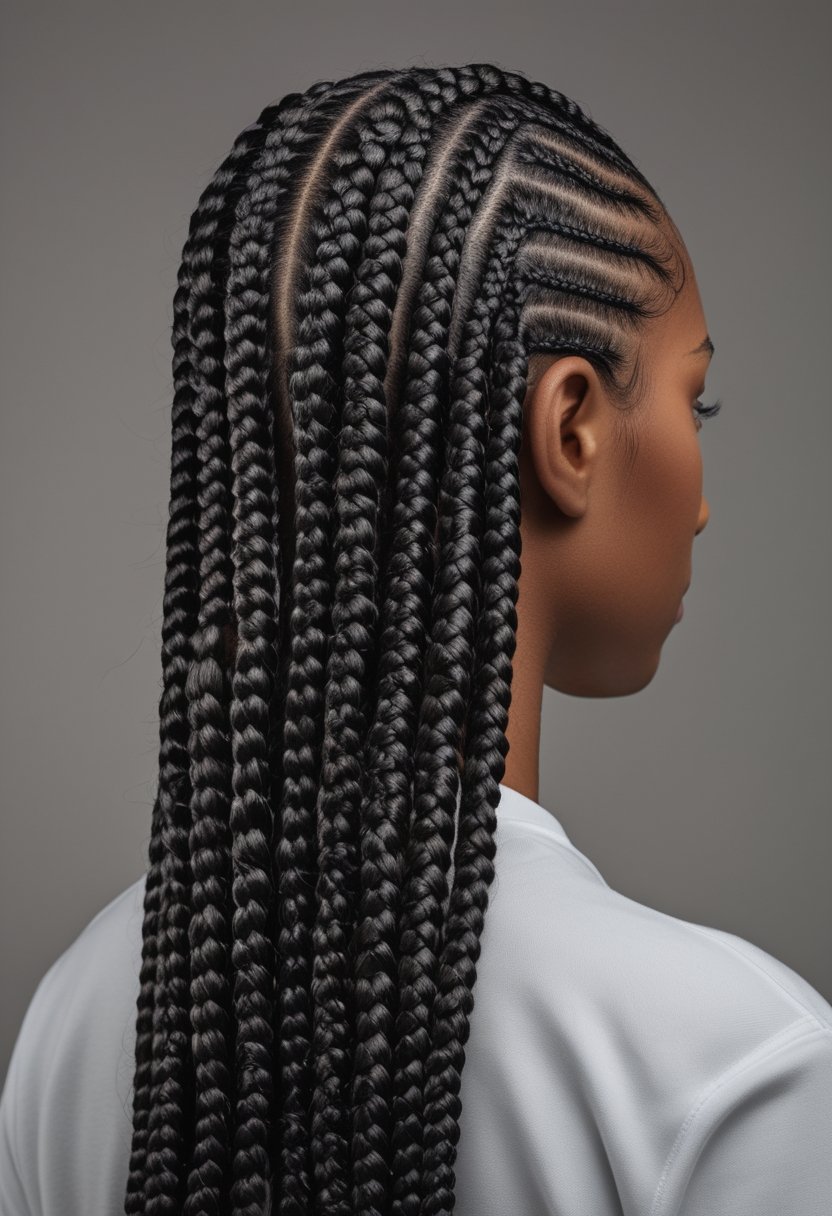
Classic straight-back cornrows are one of the cleanest and most versatile braid styles. The hair is sectioned into parallel rows beginning at the hairline and braided evenly toward the back, creating a symmetrical finish that works well for everyday wear. Medium-size rows are especially practical because they offer visible definition without requiring extremely small sections or excessive installation time.
Ask your braider to keep the tension firm enough for neatness but comfortable around the hairline and temples. Your scalp should not feel painfully tight once the style is finished, and the braids should move without pulling. You can keep the ends simple, add extensions for extra length, or gather the braids into a low ponytail depending on the look you want.
2. Stitch cornrows with clean partings
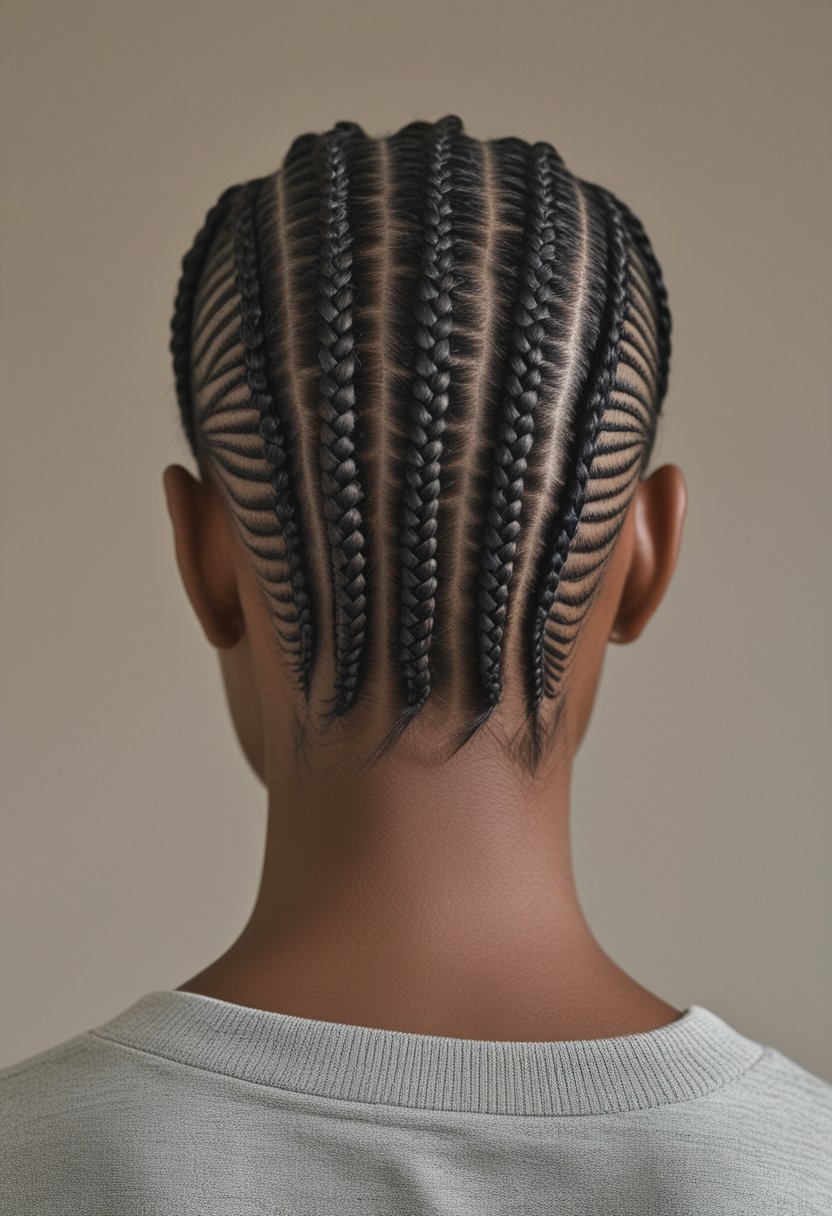
Stitch cornrows stand out because of their sharply defined sections and repeating horizontal details along each braid. The effect looks especially polished when the partings are clean and the braid sizes remain consistent from the front to the back. This style can be created with a few large rows for a bold look or several smaller rows for more intricate definition.
Because precise parting is such an important part of the finished style, bringing a clear reference image to your appointment can help your braider understand the spacing and direction you prefer. Keep edge sections slightly softer if your hairline is delicate, and avoid asking for extra-tight braids simply to make the style last longer. Comfortable tension will usually give you a better experience while still allowing the stitch pattern to look crisp.
3. Feed-In Cornrows With Extensions: A Seamless Styling Guide
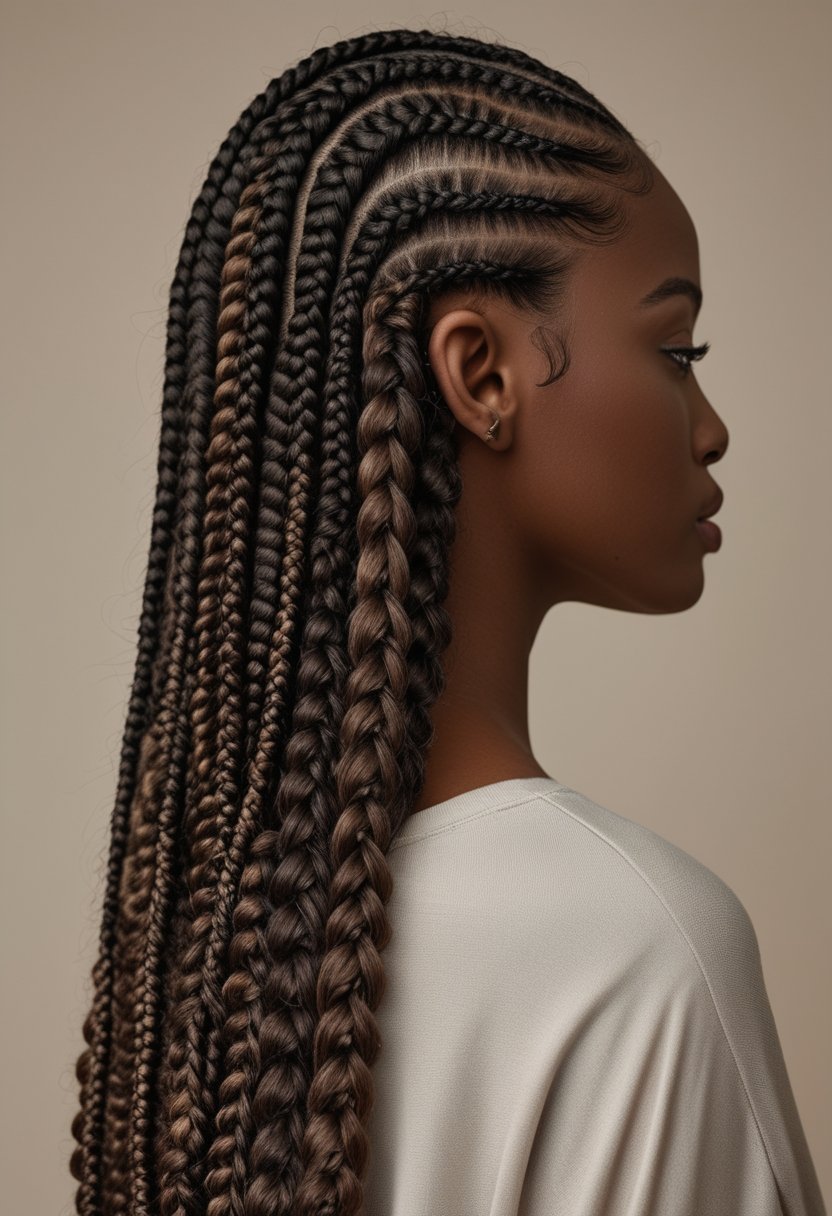
Feed-in cornrows create a smoother transition from natural hair to added length because extension hair is introduced gradually while the braid is being formed. This technique can make the roots appear lighter and more natural than braids that begin with a large amount of added hair. It is a useful choice if you want long cornrows without creating an overly bulky base near the scalp.
Decide on your preferred length and thickness before the installation so the amount of extension hair can be adjusted accordingly. Longer braids can feel heavier, so choosing a moderate size may be more comfortable for regular wear. Ask for gentle tension around the front and sides, and avoid adding excessive weight if your natural hair is fine or your edges are already fragile.
4. Fulani-inspired cornrows with side braids
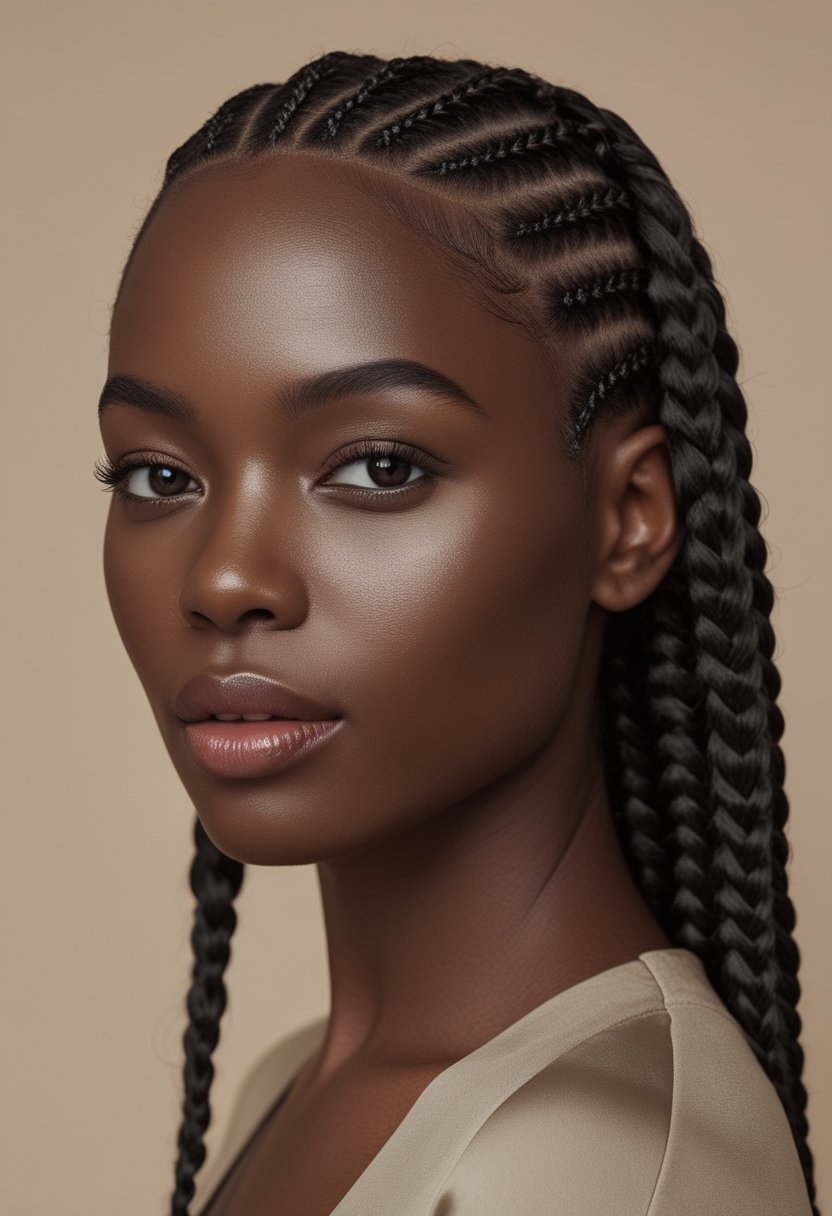
Fulani-inspired cornrows combine structured scalp braids with decorative side pieces for a distinctive look that can be customized in many ways. A center braid or defined middle section is often paired with side braids that frame the face. You can keep the design minimal or introduce beads, cuffs, or a few contrasting braid sizes for extra detail.
If you plan to add beads, think about weight as well as appearance. A few lightweight accents near the ends can create movement without putting unnecessary stress on the braids closest to your hairline. You can also ask your stylist to leave the front sections slightly looser so the style feels comfortable while still maintaining the clean, decorative shape.
5. Cornrow heart design: Try clean parting and gentle tension
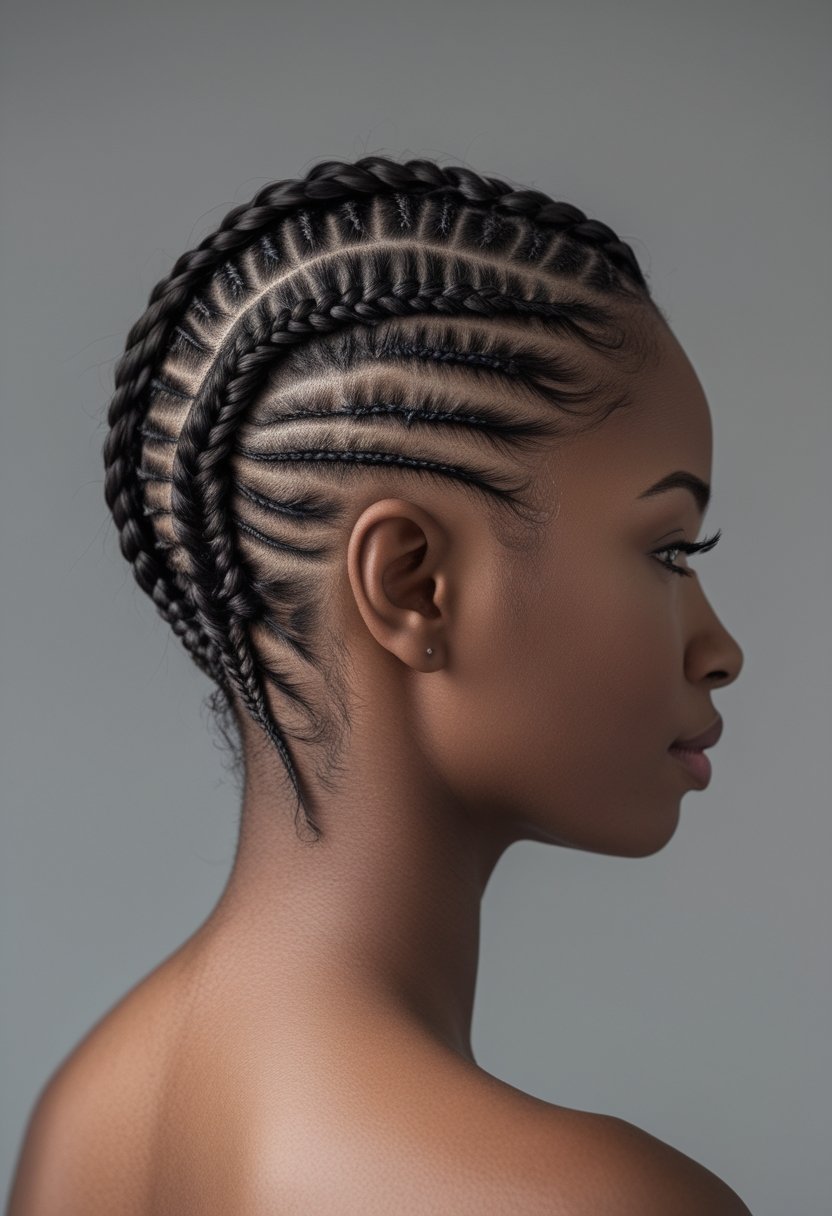
Heart-shaped cornrows turn the scalp pattern itself into the focal point of the hairstyle. The design works best when the heart is carefully sectioned and balanced with the surrounding braids, whether it appears at the side, back, or crown. Pairing one statement heart with simpler cornrows can keep the overall style visually clear instead of making every section compete for attention.
Because curved designs require controlled braiding around tighter turns, scalp comfort should remain a priority. Ask your stylist to keep the braid secure without pulling harshly around the outline of the heart or near the edges. A defined parting pattern will create most of the visual impact, so excessive tension is not necessary to make the design look sharp.
6. Zigzag geometric cornrows: Try angular parts for bold definition
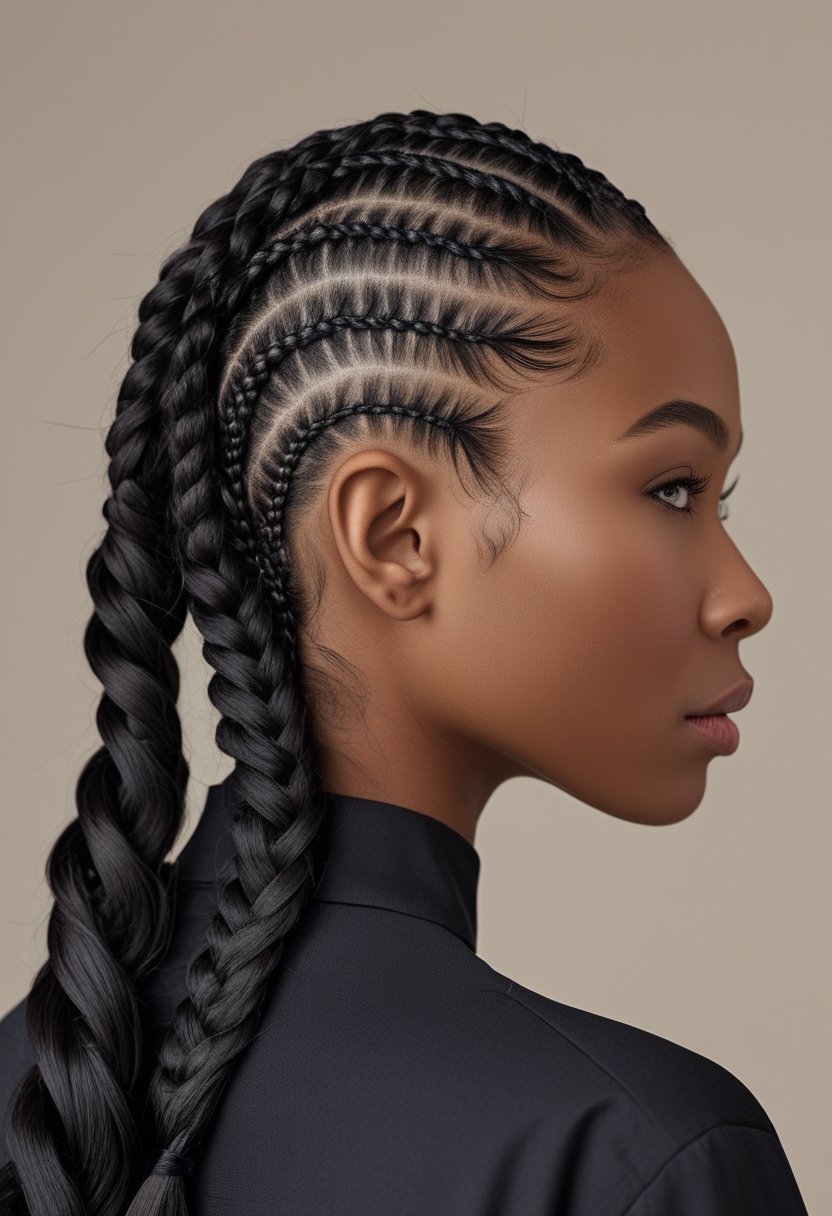
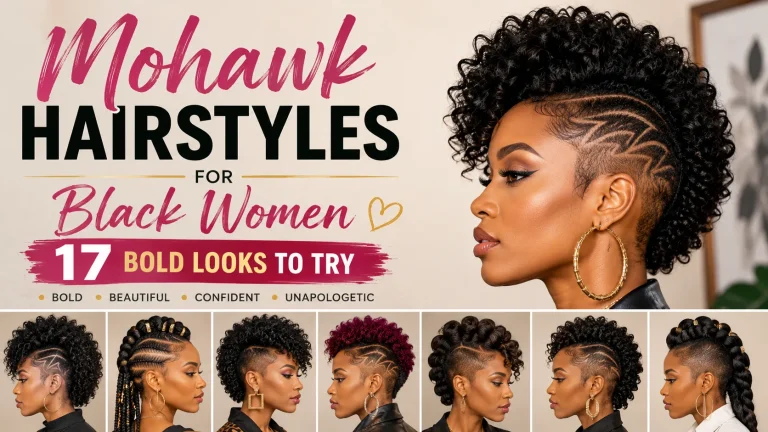
Zigzag cornrows use sharp changes in direction to create a bold geometric effect across the scalp. Instead of following simple straight lines, the partings form angles, triangles, or repeating zigzags that make the hairstyle look more architectural. This is a strong choice if you like detailed braiding but still want the finished look to feel organized and intentional.
The pattern should be planned before braiding begins so the sections remain balanced from different angles. Bring inspiration photos that show both the front and back if possible, since a geometric design can look very different depending on where the lines meet. Medium-size braids usually allow the parting details to remain visible while keeping the installation manageable and comfortable.
7. Freestyle artistic cornrows: creative patterns for personalized protective styling
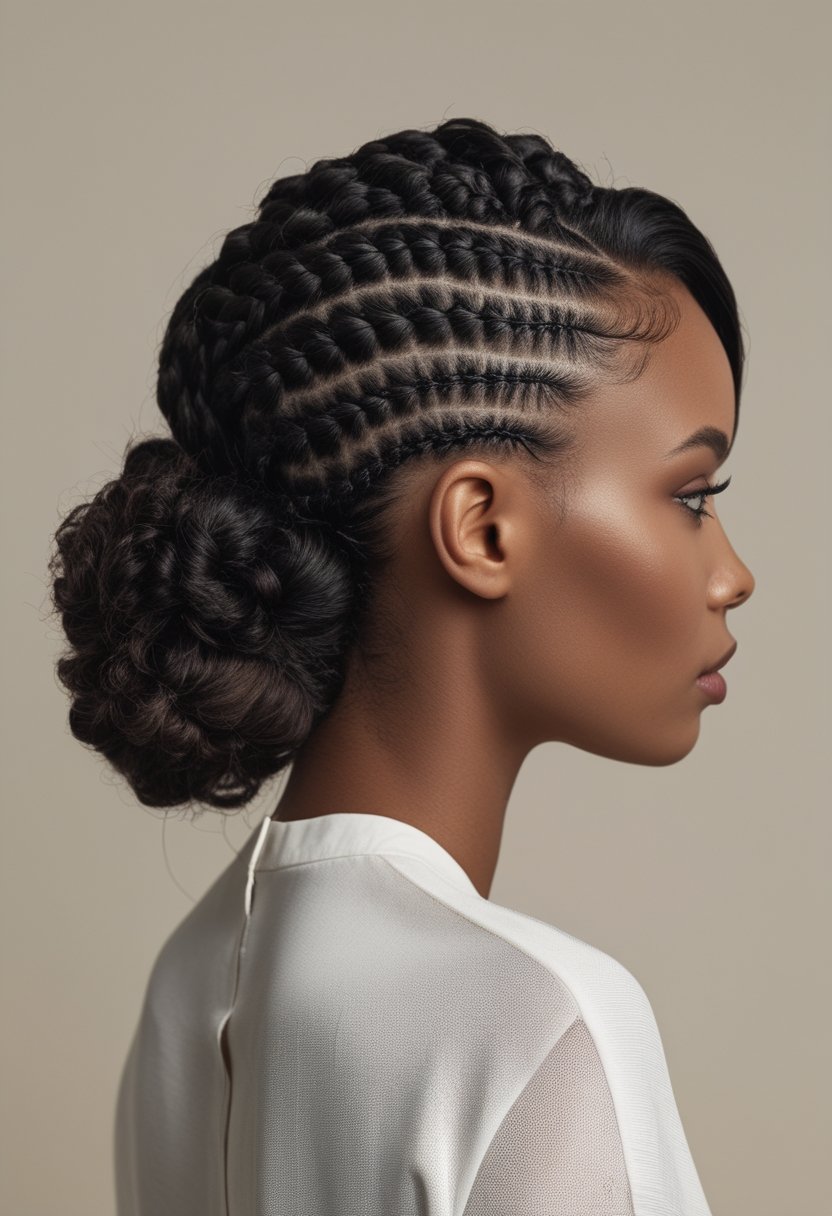
Freestyle cornrows allow the braider to combine curves, swirls, straight sections, varied braid sizes, and unexpected partings into one personalized design. This style is ideal if you want something less symmetrical than traditional rows and prefer a hairstyle that feels more artistic. You can include heart shapes, sweeping side patterns, or mixed braid directions depending on how dramatic you want the final result to be.
Show your stylist a few examples of the elements you like rather than expecting an exact copy of one complicated pattern. This gives them room to adapt the design to your head shape, hair density, and preferred braid size. Ask for comfortable tension throughout, especially where curved sections change direction, because the artistry should come from the parting and placement rather than excessive pulling.
8. Cornrow Bun Updo: Gather Braids Securely for Polished Style
A cornrow bun updo combines the neatness of scalp braids with the elegance of a gathered bun. The cornrows can be directed upward from the nape and sides so they meet at the crown, where the remaining braided length is wrapped into a secure bun. This style works particularly well for formal events, work settings, or days when you want your hair completely off your shoulders.
Make sure the bun is secured without being pulled too tightly, especially if extensions add extra weight. A bun that feels heavy or places constant pressure on one area can become uncomfortable over time. You can position it high for a more dramatic effect or lower toward the back of the head for a softer, more classic finish.
9. Cornrow ponytail with braided length
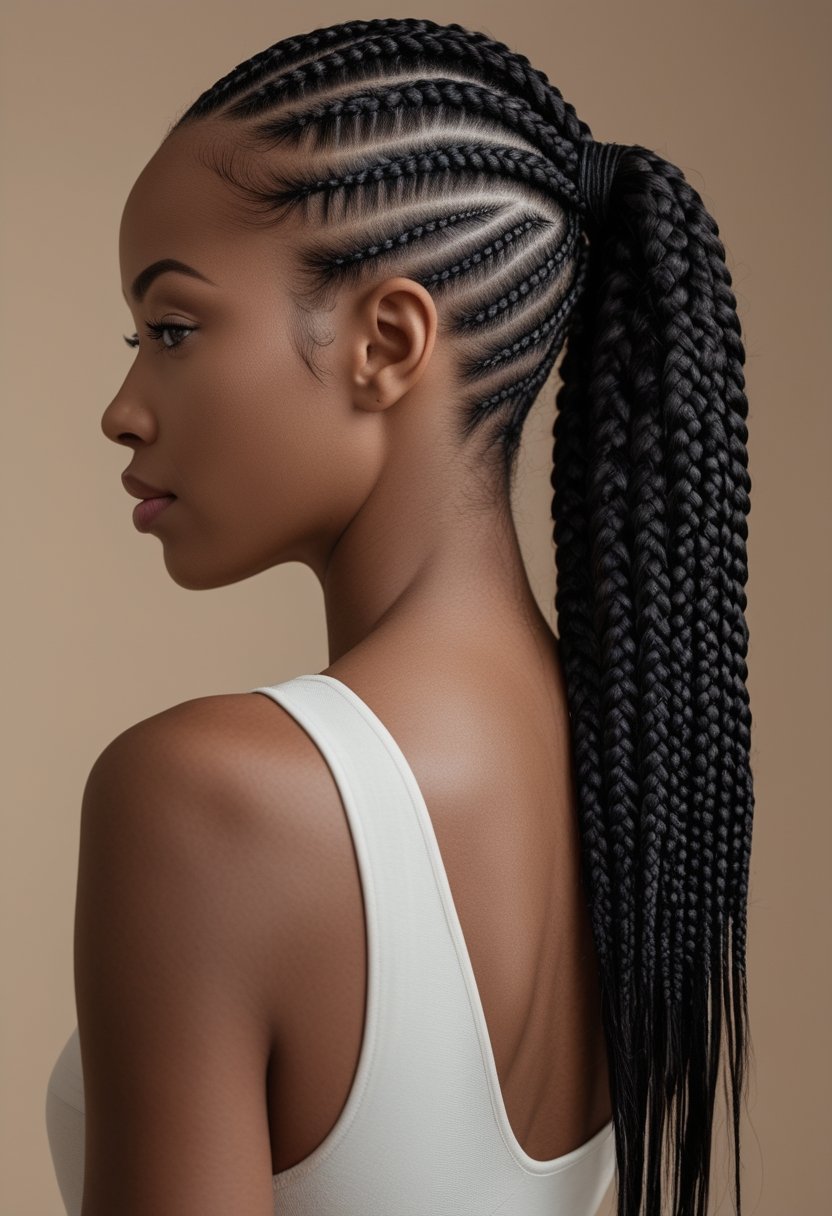
A cornrow ponytail creates a sleek shape by braiding the hair upward or backward toward a central gathering point. The remaining length can then continue into one long braid, several braids, or an extended ponytail depending on your preference. This style gives you the polish of an updo while still allowing movement through the braided length.
Ask your braider to distribute tension evenly around the head rather than pulling heavily toward the ponytail base. If you want very long extensions, consider a slightly lower ponytail position to reduce strain from the added weight. Wrapping one braid around the base can also hide the elastic or attachment point and give the finished style a more refined appearance.
10. Two Large Cornrow Braids: A Practical Styling Guide
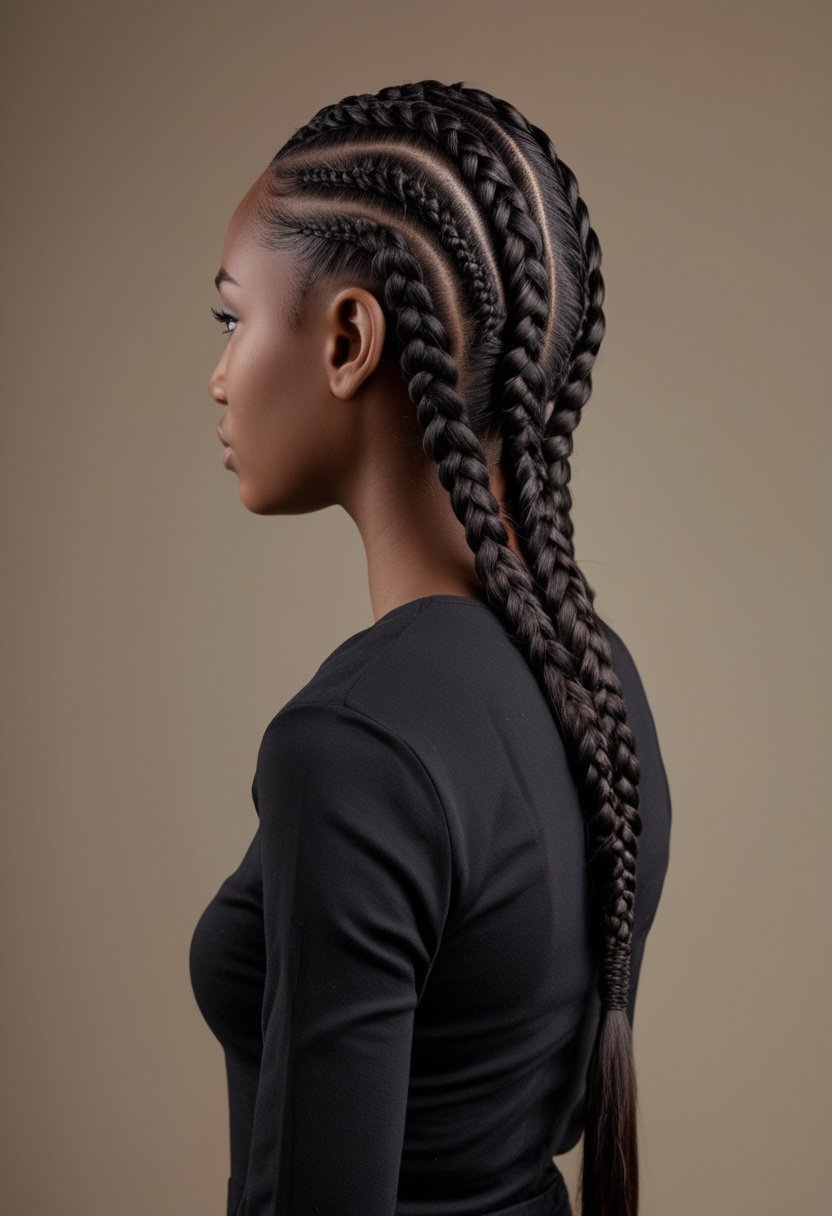
Two large cornrow braids offer a simple, sporty look that can be dressed up or kept completely casual. A clean center part divides the hair evenly, and each side is braided from the hairline toward the nape before continuing down the back. The larger braid size makes this style quicker to install than many detailed cornrow patterns while still creating a strong, defined finish.
Smooth partings and even sectioning make a big difference because there are only two braids to frame the entire style. If extensions are added, ask your stylist to build the thickness gradually so the front does not feel overly heavy. The finished braids should feel secure without pulling at the temples or causing soreness along the center part.
11. Small lemonade-style cornrows: guide for neat, side-swept definition
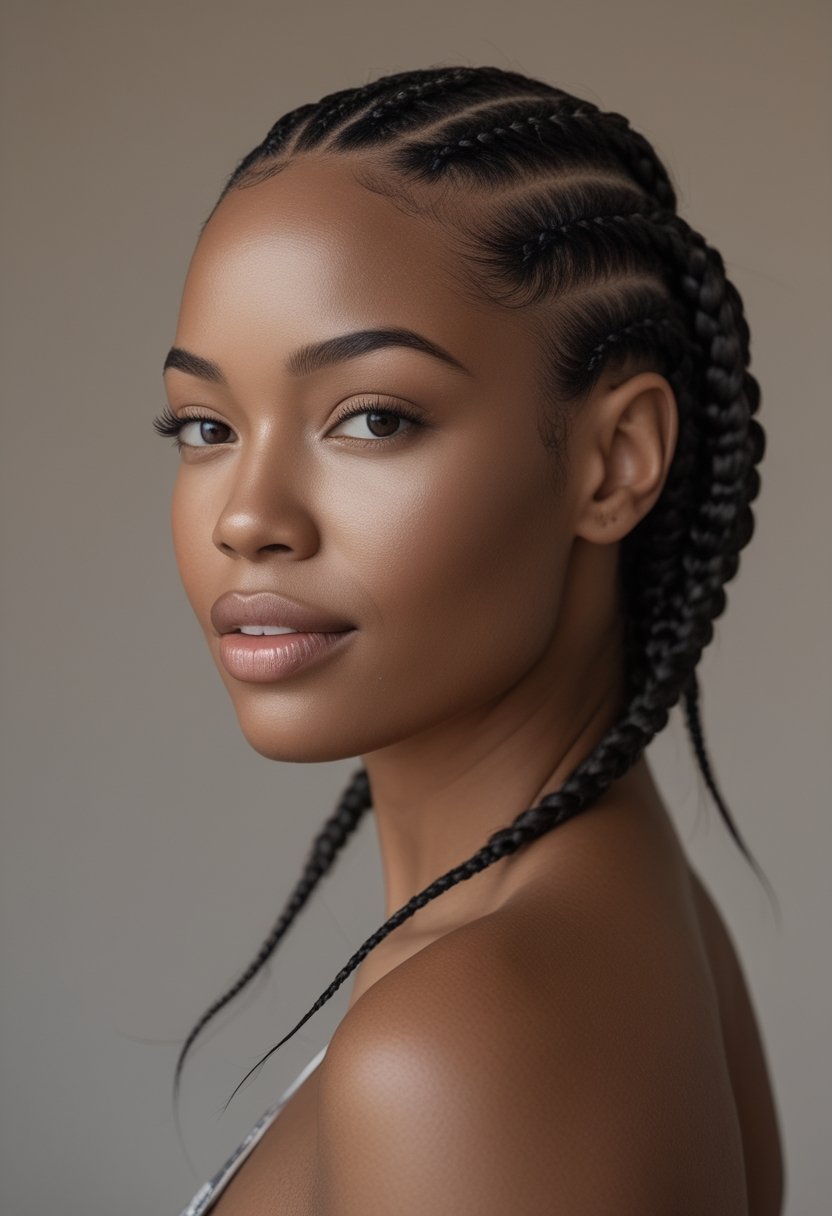
Lemonade-style cornrows create a distinctive side-swept effect by directing many small or medium braids toward one side of the head. The diagonal flow gives the style movement and makes it easy to create decorative patterns near the hairline or crown. Smaller braids can provide more detail, while slightly larger rows create a softer version that may require less installation time.
Because several braids often begin close to the front and sides, edge protection is especially important with this look. Ask your braider to avoid grabbing extremely fine hairs along the hairline or using excessive tension to make the style appear tighter. You can finish the braids with simple ends, subtle cuffs, or a few beads while keeping the main side-swept shape as the focal point.
12. Cornrows with curly ends
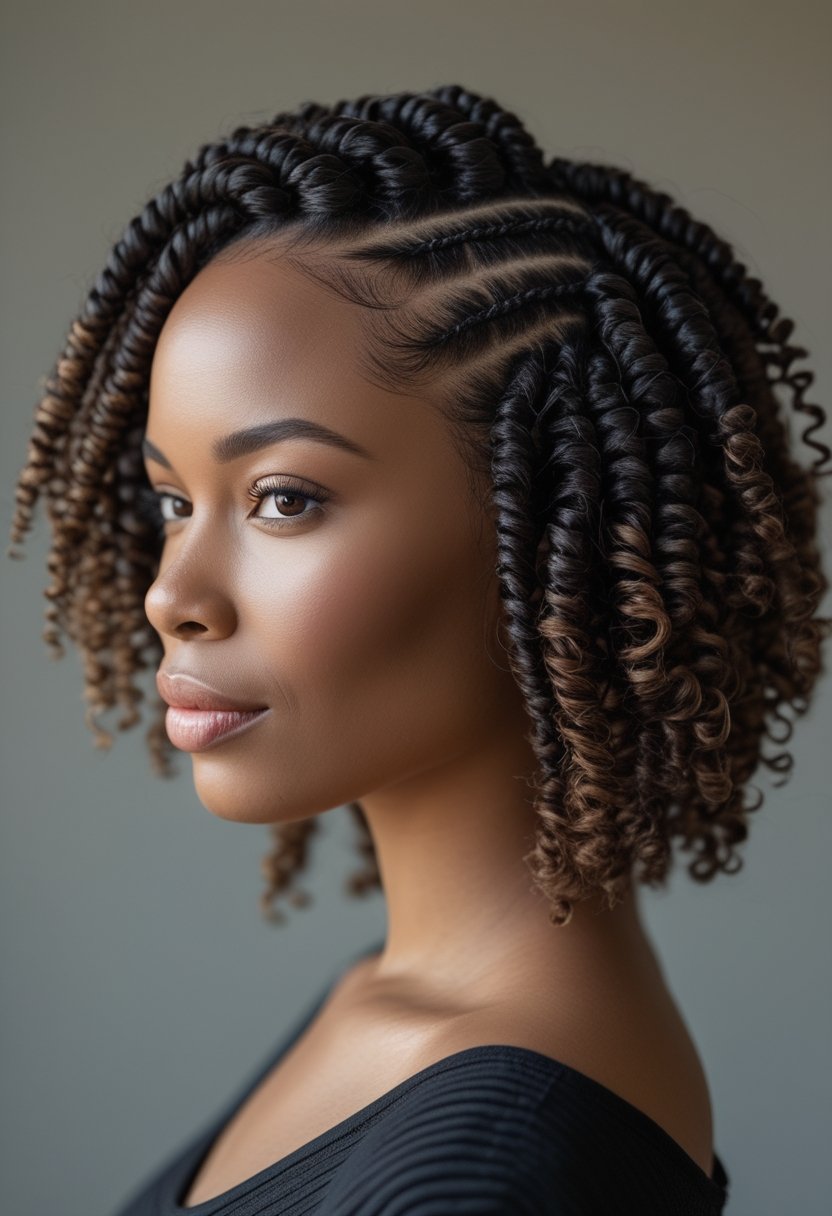
Cornrows with curly ends combine sleek braided roots with soft, flowing texture through the lengths. The contrast makes the hairstyle feel lighter and more romantic than fully braided ends while still giving you the structure of cornrows at the scalp. You can choose tight curls for more volume or looser waves for a relaxed finish.
Consider how much loose hair you want before your appointment, since the point where the braids transition into curls will affect the overall shape. Longer curly ends create more movement, while shorter curls can keep the style easier to manage. Protect the loose sections at night with a satin scarf or bonnet and separate the curls gently rather than brushing them aggressively.
13. Bohemian cornrows with loose curls
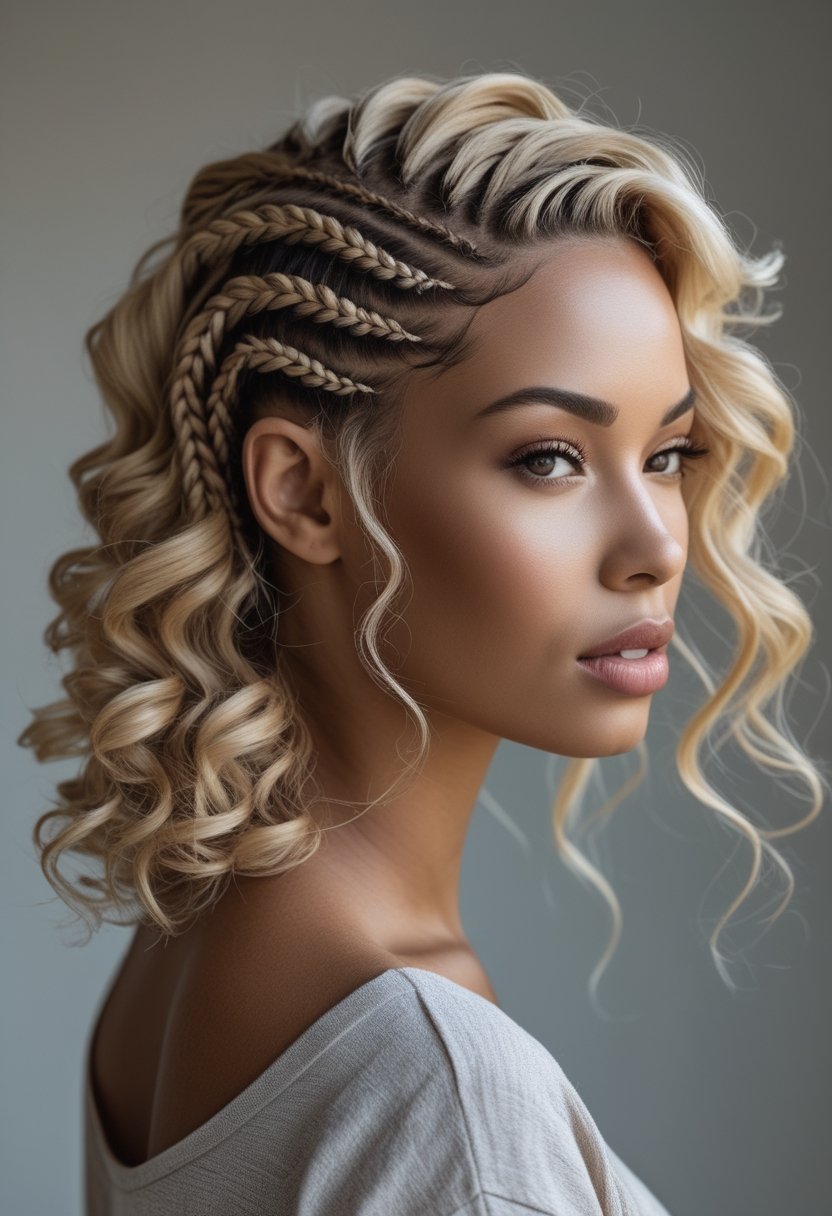
Bohemian cornrows blend neat scalp braids with strategically placed loose curls for a softer, more textured finish. Instead of limiting curls to the ends, small curly sections can appear between or alongside the braids to create movement throughout the style. This works especially well if you like protective braiding but prefer a less structured appearance than traditional cornrows.
Loose curls require more maintenance than fully braided hair, so plan for gentle detangling and nighttime protection. Use your fingers to separate the curls and avoid pulling on the braided roots when refreshing the style. Ask for comfortable tension around the edges and temples, since the relaxed bohemian effect looks best when the hairline is not pulled excessively tight.
14. Half-up, half-down cornrows: versatile styling ideas
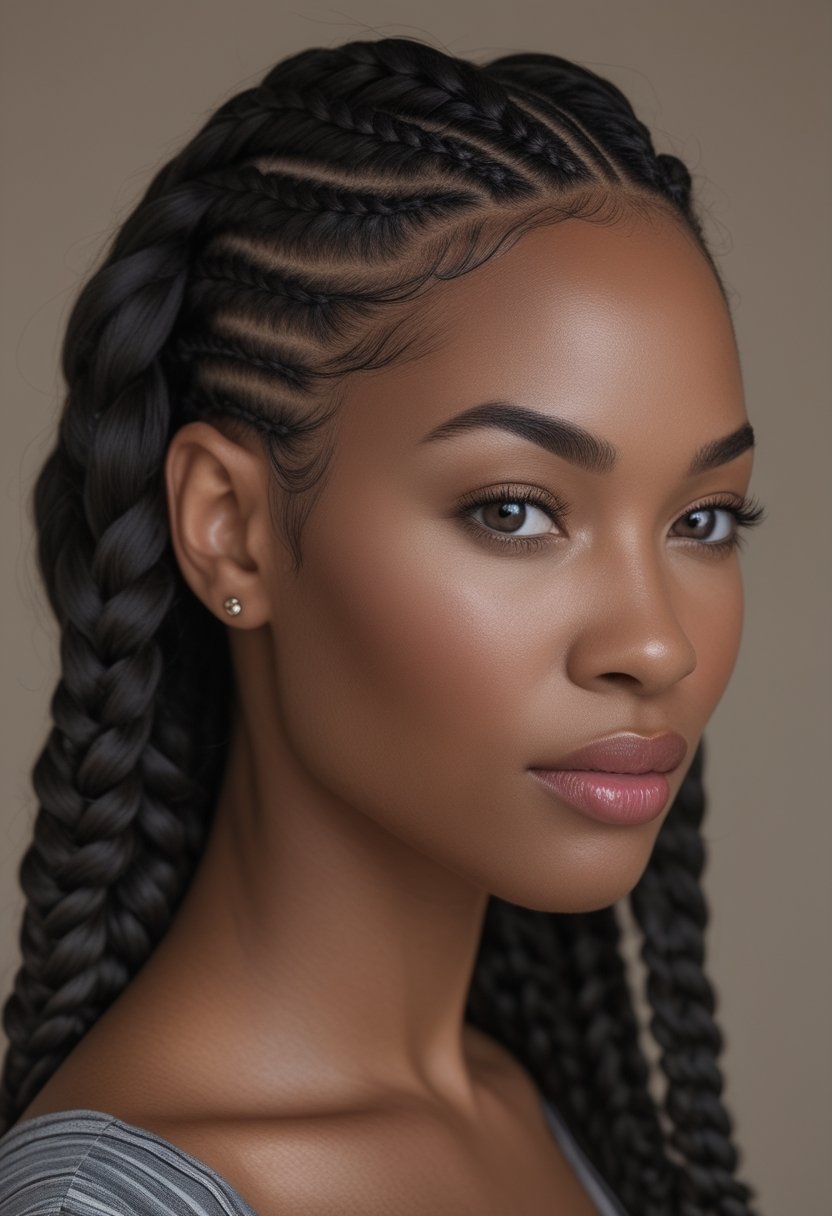
A half-up, half-down cornrow style gives you the structure of braids around the top of the head while leaving the lower section loose. The cornrows can run straight back, curve toward the crown, or form a small ponytail or bun before transitioning into curls or natural texture. This makes the style especially versatile if you want definition without braiding every section of your hair.
Think about how you usually wear your loose hair when deciding where the braided section should end. A higher braided crown creates more lift, while a lower transition can feel softer and more relaxed. Keep the loose portion moisturized and detangled, and make sure the braided top is not so tight that it creates tension when you gather it into the half-up section.
15. Cornrow braided crown: a polished protective styling idea
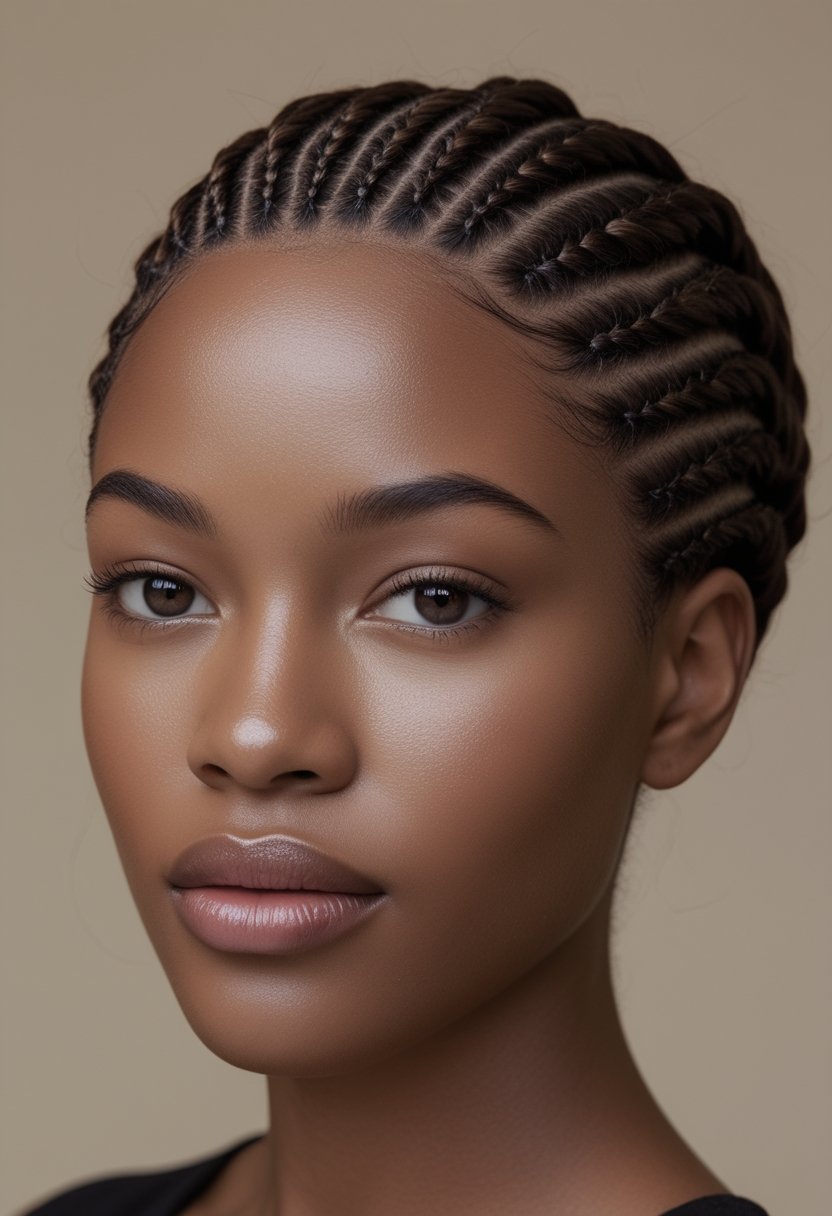
A cornrow braided crown uses curved rows that follow the shape of the head, creating a wrapped effect around the perimeter. The circular pattern gives the style an elegant, sculpted appearance that can work beautifully for special occasions as well as everyday protective wear. Depending on your preference, the crown can be created with one prominent braid or several smaller rows layered together.
The ends should be tucked and secured discreetly so the crown appears continuous without bulky attachment points. Ask your braider to keep the perimeter comfortable because this style naturally follows areas near the hairline and ears. Simple accessories such as a few metallic cuffs can add detail, but the curved braid pattern is usually striking enough to stand on its own.